When Juanita and Forbes Creeks Rise
What happens in Kirkland's creek basins during long rains, and where water reaches homes.
KIRKLAND · EASTSIDE · WASHINGTON
Water that's been sitting for a day costs more to fix than water caught in the first hour. Speak with an Eastside water removal company at (425) 437-2143.
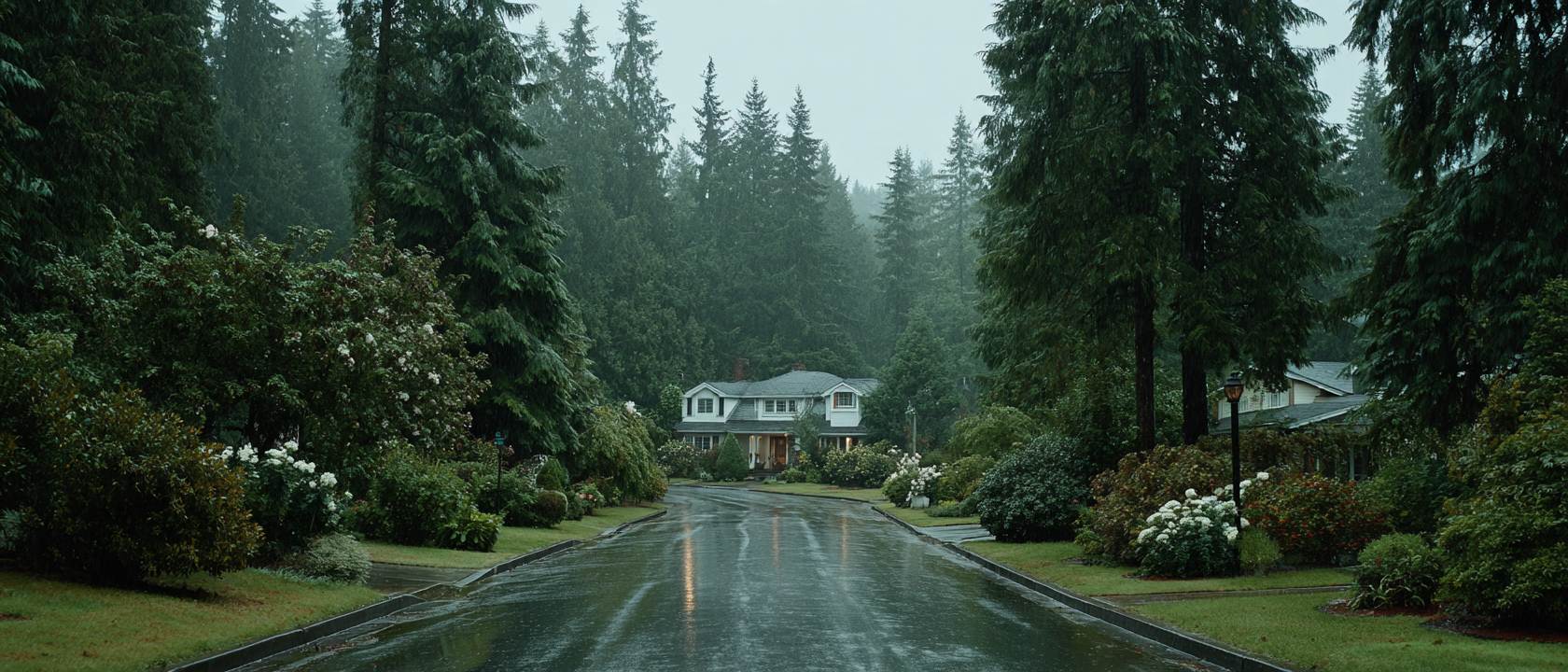
Most water damage in Kirkland arrives during the rainy months, when saturated hillsides and swollen creeks push water toward lower levels, and the rest comes from inside: supply lines, dishwashers, washers and water heaters in finished spaces. Either way, the water needs to be extracted and the structure dried properly. One Kirkland number, (425) 437-2143, puts that in motion.
Kirkland sits on a slope that runs down to Lake Washington, cut by creeks like Juanita and Forbes that carry stormwater to Juanita Bay. About 40 inches of rain falls in a typical year, much of it between October and March, with November usually the wettest month. When a storm stalls over the Eastside for several days, the ground stops absorbing it. Water then finds the easiest path, which is often a basement wall, a crawl space or the uphill side of a house built into a slope.
The other half of the story is the houses themselves. Many have finished lower levels, hardwood or engineered flooring and laundry rooms upstairs. A failed hose or a cracked fitting in a home like that can soak several rooms before anyone notices.
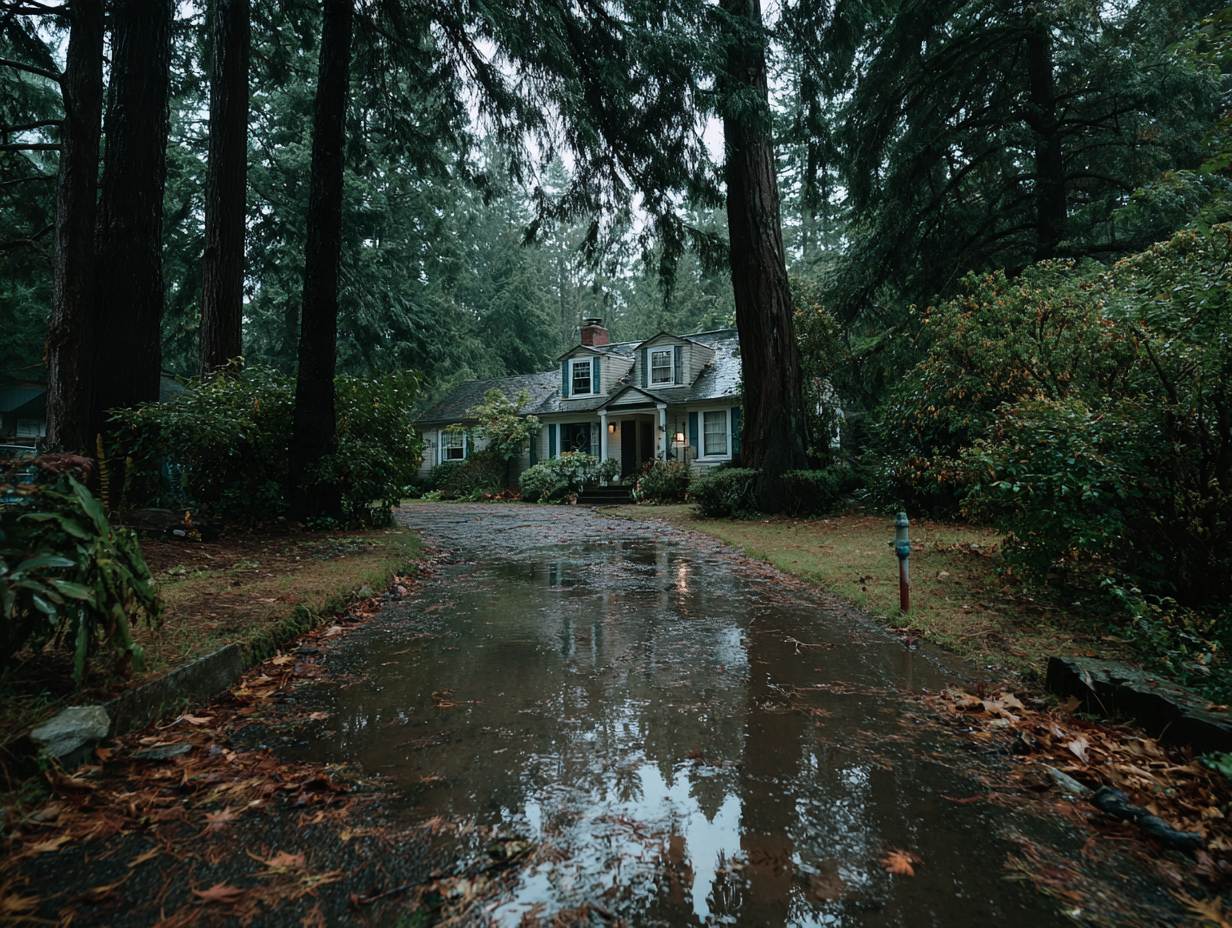
Water in a finished basement or crawl space spreads into carpet pad, drywall and insulation where it's hard to see. A restoration company can extract it and set up drying before it settles in. Phone (425) 437-2143.
A dishwasher, washer or supply line leak usually runs under cabinets and flooring, then into the room next door. The sooner it's measured and dried, the more can stay. (425) 437-2143.
A stain or sag under an upstairs bathroom means the drywall above is already wet, and possibly the framing too. Keep clear of a sagging ceiling and phone (425) 437-2143.
Standing water needs pumps and extractors, not towels. Talk it through with a local restoration company at (425) 437-2143 and get extraction started.
A smell, a soft spot or a stain you can't explain is worth a call. Describe it and the restoration company will tell you what it likely is: (425) 437-2143.
Speak with an Eastside water removal company at (425) 437-2143.
Call (425) 437-2143| When | What tends to happen |
|---|---|
| October | The first long rains; gutters and downspouts fill with needles and leaves |
| November | Usually the wettest month; creeks rise and hillsides saturate |
| December to January | Atmospheric rivers bring multi-day rain; windstorms knock out power, and with it sump pumps |
| February to March | The ground stays saturated; seepage into basements and crawl spaces |
| April to June | Rain eases; leaks that started in winter show up as stains and smells |
| July to September | Dry season; appliance and plumbing failures do most of the damage |
More on the wet months: when Juanita and Forbes creeks rise and atmospheric rivers and Eastside homes.
Where the water came from changes nearly everything that follows. Water from a supply line, a dishwasher hose or a water heater is clean when it escapes. If extraction begins while it's still clean, carpet can sometimes be dried and relaid, drywall can often stay, and most claims for it are straightforward because the cause is sudden and easy to show.
Water that comes in from outside is another matter. Creek overflow, hillside runoff and groundwater rising through a slab carry soil and whatever else was on the ground. Porous materials it reaches are usually removed rather than dried, surfaces are cleaned before drying starts, and many homeowners policies treat it differently from a burst pipe. Plenty of Kirkland lower levels see both kinds in the same winter: a sump fails during a storm, or a gutter overflows beside a foundation that already has a slow leak.
You don't have to sort that out before calling. A restoration company will look at where the water entered, take readings and explain which kind of job it is, and what that means for the house and for the claim. Phone (425) 437-2143 and describe what you're seeing.
A restoration company's first visit is mostly about finding the edges of the problem. Expect a technician to:
The point of all that measuring is to dry what's actually wet, no more and no less. In homes with finished basements and wood floors, that care is what keeps a two-room leak from becoming a whole-floor remodel. The rest of the process is on drying & repairs.
Kirkland's housing changes a lot from one neighborhood to the next, and so does the way water damages it. Finn Hill, North Juanita and Kingsgate joined the city in 2011, bringing tens of thousands of residents and a wide mix of hillside homes, mid-century subdivisions and newer construction. Houghton and Lakeview step down to the lake, where water tables run high and slopes send runoff toward foundations. Downtown and Totem Lake have many condos and townhomes, where water from one unit can end up in another.
Across all of them, the common thread is finished space: basements with carpet and built-ins, engineered and solid hardwood, and plumbing above living areas. Those finishes are worth saving, which is why careful moisture mapping matters more than tearing out everything that got wet. Further out, Bellevue, Redmond and Sammamish add large newer homes with upstairs laundry rooms, while Bothell, Woodinville and Kenmore bring river valleys and wooded hillsides into the picture. The causes change from place to place; the call is the same. See what can be saved in a finished basement.

Water extraction: pumps and extractors for standing water on any floor.
Basements & crawl spaces: rain seepage, hillside runoff and sump pump failures below the main floor.
Kitchens, baths & laundry: fixture and appliance leaks that soak cabinets and floors.
Ceilings & upper floors: upstairs bathrooms, laundry rooms and roof leaks.
Drying & repairs: moisture mapping, structural drying and rebuilding.
For an ordinary household leak, drying equipment usually runs about three to five days. Finished basements, hardwood and wet crawl spaces take longer, and the job is done when moisture readings match dry parts of the house.
Sudden, accidental water damage, like a burst supply line, is usually covered; slow leaks and flooding from outside usually aren't. What adjusters want to see: moisture logs and claim paperwork.
Often, if the water was clean and the electrical system wasn't affected. The equipment is loud and runs continuously, so read living with drying equipment before you decide.
How much water, how long it sat, what it reached and what has to be replaced. The factors in plain terms: what moves the price.
What happens in Kirkland's creek basins during long rains, and where water reaches homes.
How runoff on a slope ends up inside a lower level.
Associations, unit owners and insurers, in plain terms.

